

Knee Cartilage
Demo Author One
Cartilage repair options for lasting joint health
A practical overview of cartilage repair, injection therapy, rehabilitation planning, and the clinical evidence that guides joint preservation care.

Regenerate or support repair
PRP concentrates your blood’s growth factors to support natural repair. NanoACi regenerates cartilage using your own cells, a scaffold and PRF. Here is how to choose.
 Reviewed byProfessor Paul Lee MBBch, FRCS (Tr & Orth), PhDCartilage and joint preservation expertise
PRP (platelet-rich plasma) concentrates the growth factors already in your blood and injects them back to support the body’s own repair. It is milder, cheaper (about £1,200) and suits mild or early joint problems, often as a course. NanoACi is a fuller regenerative protocol: your own cartilage cells, a ChondroFiller scaffold and PRF, delivered in one session, £8,000. Worth knowing: PRF is actually a component within NanoACi, so at the deepest level this is not strictly either/or.
Both are offered at London Cartilage Clinic. PRP is a sensible first step for mild or early wear and soft-tissue problems; NanoACi is for when the goal is to regenerate cartilage rather than only support repair.
| What to compare | PRP injection | NanoACi |
|---|---|---|
| What it does | Concentrates the growth factors in your own blood and injects them to support the body’s natural repair | Delivers your own cartilage cells, a ChondroFiller scaffold and PRF to regenerate cartilage |
| What is in the injection | Your own platelets and their growth factors | Your own cells, a collagen scaffold and PRF, all from your own body |
| The goal | Supports natural repair and calms symptoms | Aims to regenerate worn cartilage |
| Best suited to | Mild or early joint problems, and soft-tissue injury | Cartilage wear you want to regenerate, judged on imaging rather than symptoms |
| Sessions | Often a course of injections | One session |
| Cost | From about £1,200 | £8,000, or £8,500 all-inclusive |
| How they relate | PRF, a close relative of PRP, is one component within NanoACi | Includes a PRF step, so it builds on the same biology PRP uses |
Both are offered at London Cartilage Clinic; this is a genuine choice, not a takedown of PRP.
PRP is a genuine, useful treatment and a real option here. For mild or early problems, concentrating your own growth factors can calm symptoms at a modest cost. Its limit is that it supports repair rather than rebuilding cartilage, which is where NanoACi goes further, adding your own cells and a scaffold to the same growth-signal idea. Because PRF sits inside NanoACi, the honest framing is less either/or and more how much you want to do in one session. Professor Lee will set out which fits your joint after reviewing your imaging.
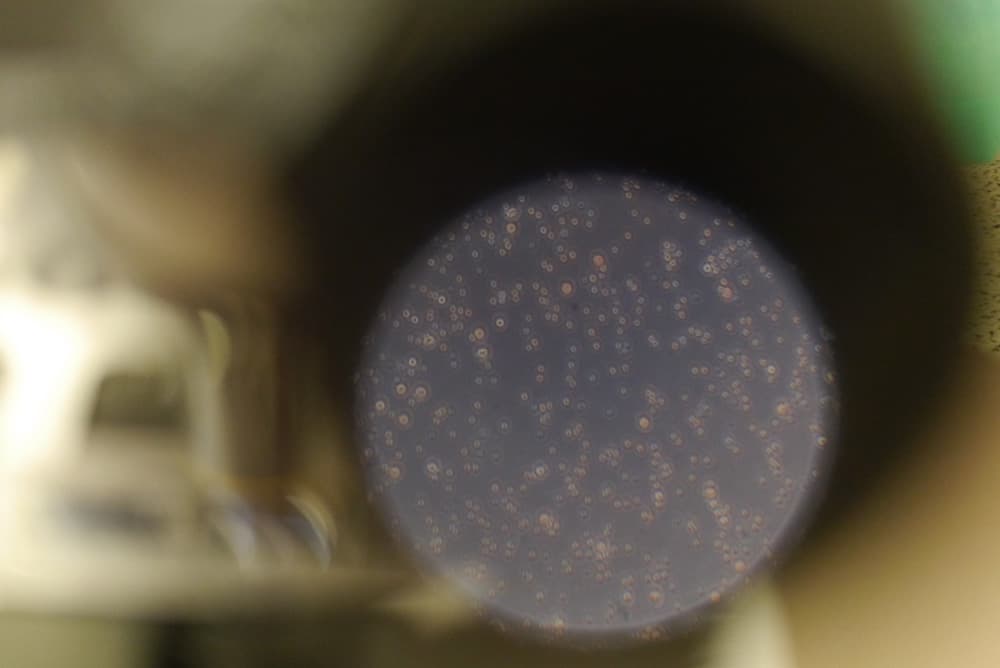

PRP (platelet-rich plasma) concentrates the growth factors already in your blood and injects them back into the joint to support your body’s natural repair. NanoACi goes further: in a single session Professor Lee delivers your own cartilage cells (prepared with the Mytocel MSK technique), a ChondroFiller scaffold and PRF, so the aim is to regenerate cartilage rather than only support repair. PRP is milder and cheaper; NanoACi is the fuller regenerative protocol.
It depends on what you are treating and what you want to achieve. For mild or early joint problems, or a soft-tissue injury, PRP is a sensible, lower-cost first step. When the goal is to regenerate worn cartilage, NanoACi does more by adding your own cells and a scaffold. Both are offered at London Cartilage Clinic, and Professor Lee advises which fits your joint after reviewing your imaging, not from symptoms alone.
In a sense, yes. NanoACi includes a PRF step, and PRF (platelet-rich fibrin) is a close relative of PRP, prepared from your own blood on the day. So at the deepest level this is not strictly an either/or choice: NanoACi builds on the same growth-signal biology that PRP uses, and adds your own cartilage cells and a ChondroFiller scaffold on top.
PRP is the lower-cost option, from about £1,200, and is often given as a course. NanoACi is £8,000, or £8,500 all-inclusive, which covers an MRI scan, your consultation, the single NanoACi session and a follow-up. See the NanoACi cost page.
Yes. PRP is a reasonable first step for mild or early problems, and it does not close the door on NanoACi afterwards. Because NanoACi already includes a PRF step, the two are complementary rather than mutually exclusive. Professor Lee can help you decide whether to begin with PRP or go straight to the fuller protocol, based on your imaging. See Am I a candidate for NanoACi?
Still have more specific concerns?
Free Discovery CallOptions that our doctors may discuss include NanoACi, ChondroFiller, Mytocel MSK, joint replacement, established conservative care or surgery, depending on examination and imaging.
Because both are offered here, the fairest next step is a review of your imaging. Start with a free discovery call, or book an MRI and consultation with Professor Lee.
London Cartilage Clinic
Clinical updates, cartilage treatment guidance, and recovery-focused articles from our specialist team.
A practical overview of cartilage repair, injection therapy, rehabilitation planning, and the clinical evidence that guides joint preservation care.
A practical overview of cartilage repair, injection therapy, rehabilitation planning, and the clinical evidence that guides joint preservation care.
A practical overview of cartilage repair, injection therapy, rehabilitation planning, and the clinical evidence that guides joint preservation care.